
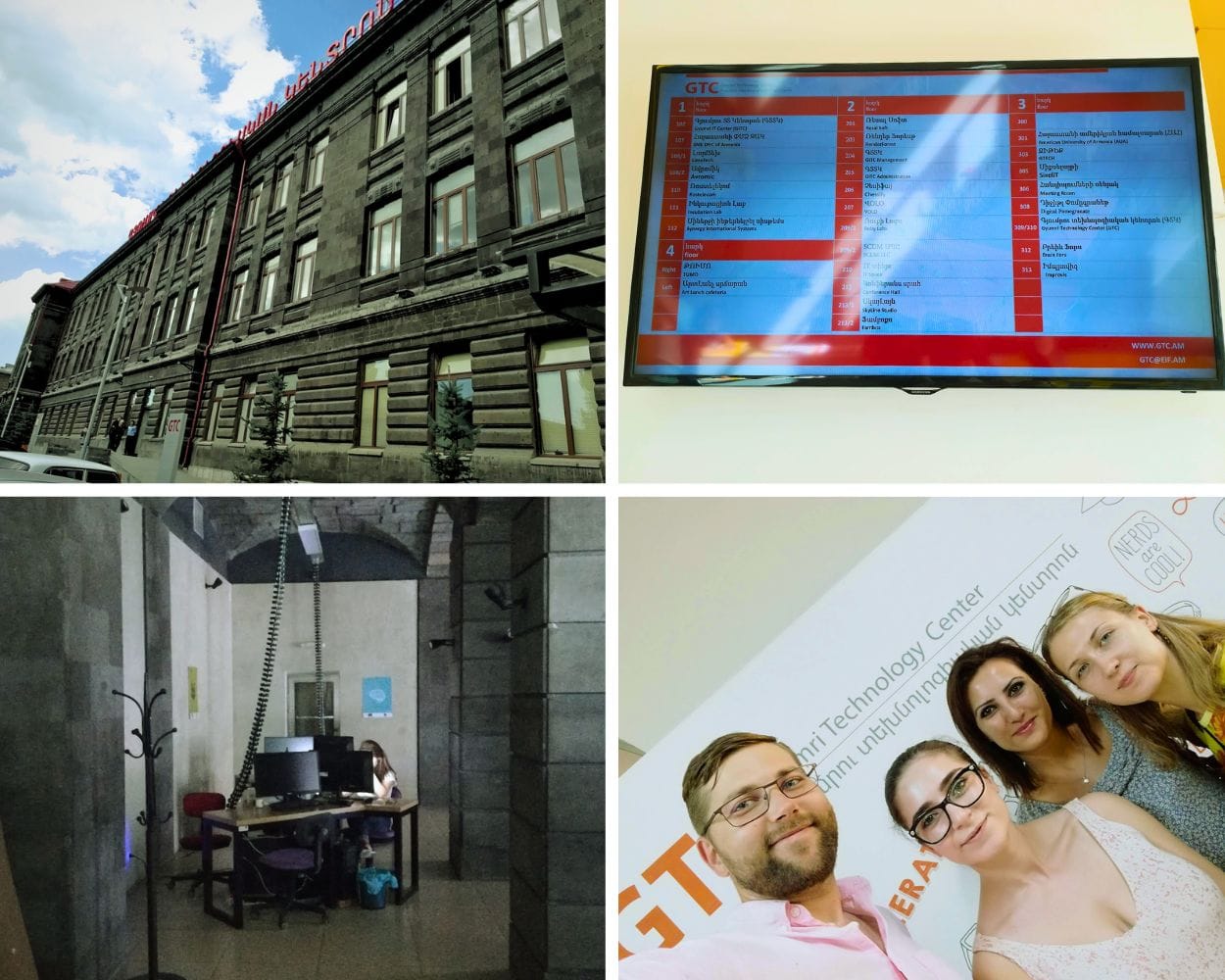
A few years ago, I visited the Gyumri Technology Center in Armenia. On paper, it’s a tech hub. In reality, it’s an entire ecosystem compressed into a single building.
On one floor, students are trained at GITC.
On another hand, startups like Renderforest, Chessify, VOLO, and Digital Pomegranate were building early versions of what later became real companies.
Just down the hall, universities and global firms provided the anchor points that every ecosystem needs, but few manage to create intentionally.
For a city still carrying the scars of the 1988 earthquake, Gyumri didn’t treat technology as a trend. It treated it as a strategy, a long-term design choice for renewal. And the fact that many of those names are thriving today is the strongest validation any ecosystem can hope for.
Visiting Gyumri made me think of my own hometown. A city with deep industrial roots, technical talent, and the capacity to reinvent itself. With the right sequence — education → incubation → corporate partnerships → community visibility — regional cities can create their own gravitational pull. They don’t need to imitate capitals; they need to cultivate pipelines.
The quiet lesson Gyumri left with me is this: regional tech hubs aren’t charity. They’re economic infrastructure.
When a city builds a pipeline instead of a monument, innovation becomes a predictable outcome, not an exception.
Special thanks to Arpine Nikolyan, whose work in empowering youth and women shows how much impact one determined catalyst can have on an entire community.